
For a midday meditation, step away from your screen, sit somewhere you will not be interrupted and follow your breath for five minutes. Set a timer first so you are not watching the clock. That is the whole practice.
The National Center for Complementary and Integrative Health describes one form of meditation as maintaining mental focus on a particular sensation, such as breathing. A lunch break suits this because it already sits between two stretches of work.
A five-minute midday sitting
- Pick a spot away from your desk if you can: a bench, a parked car, a quiet corner of the break room. Put your phone on silent and set a timer for five minutes.
- Sit with your back supported and your feet on the floor. Rest your hands on your lap.
- Close your eyes, or lower your gaze to a point a few feet ahead.
- Notice where the breath is clearest, perhaps the nostrils or the belly. Stay with that spot.
- Your mind will move to the afternoon's tasks. When you notice, return to the breath. The return is the practice.
- When the timer sounds, take one slower breath and open your eyes before you stand.
Try box breathing
Follow three rounds: breathe in for four counts, hold for four, breathe out for four, then hold for four.
Ready when you are.
Keep your breath comfortable. If holding your breath feels uncomfortable, skip the holds or stop and breathe normally.
A minute of box breathing first
If you sit down still wound up from a meeting, spend one minute on box breathing before step 3. Breathe in through your nose for a count of four, hold for four, breathe out through your mouth for four and hold for four. The University of Pittsburgh's SOVA page on box breathing suggests repeating the cycle four or five times, and says not to count too fast.
Keep the breath smooth. The NHS guide to breathing exercises for stress says to breathe without forcing it. If the holds feel strained, shorten them or skip them. The box breathing guide has the full steps, and the free box breathing timer shows the rhythm so there is nothing to count.
Before or after eating
Sit before you eat if you tend to rush back to work, since the break then starts with a pause. Sit after eating if a full stomach makes you restless. Either works, so choose the one you will repeat.
When a walk fits better
The NHS suggests picking a regular time for mindfulness, such as a walk at lunchtime. If sitting indoors feels flat, walk slowly for five minutes and pay attention to your steps. The walking meditation guide has the steps.
Making it a habit
Tie the sitting to something that already happens, such as the moment you finish your sandwich or leave the building. Five minutes is a starting length. For more on length, see how long you should meditate. If you have only a few minutes at your desk between meetings, meditation for focus at work covers that case.
When to skip it
The NHS says that many people find mindfulness helpful, but it is not right for everyone. The NCCIH says these practices usually are considered to have few risks, although few studies have looked for harmful effects. If a break leaves you more unsettled, stop and do something else.
Next step
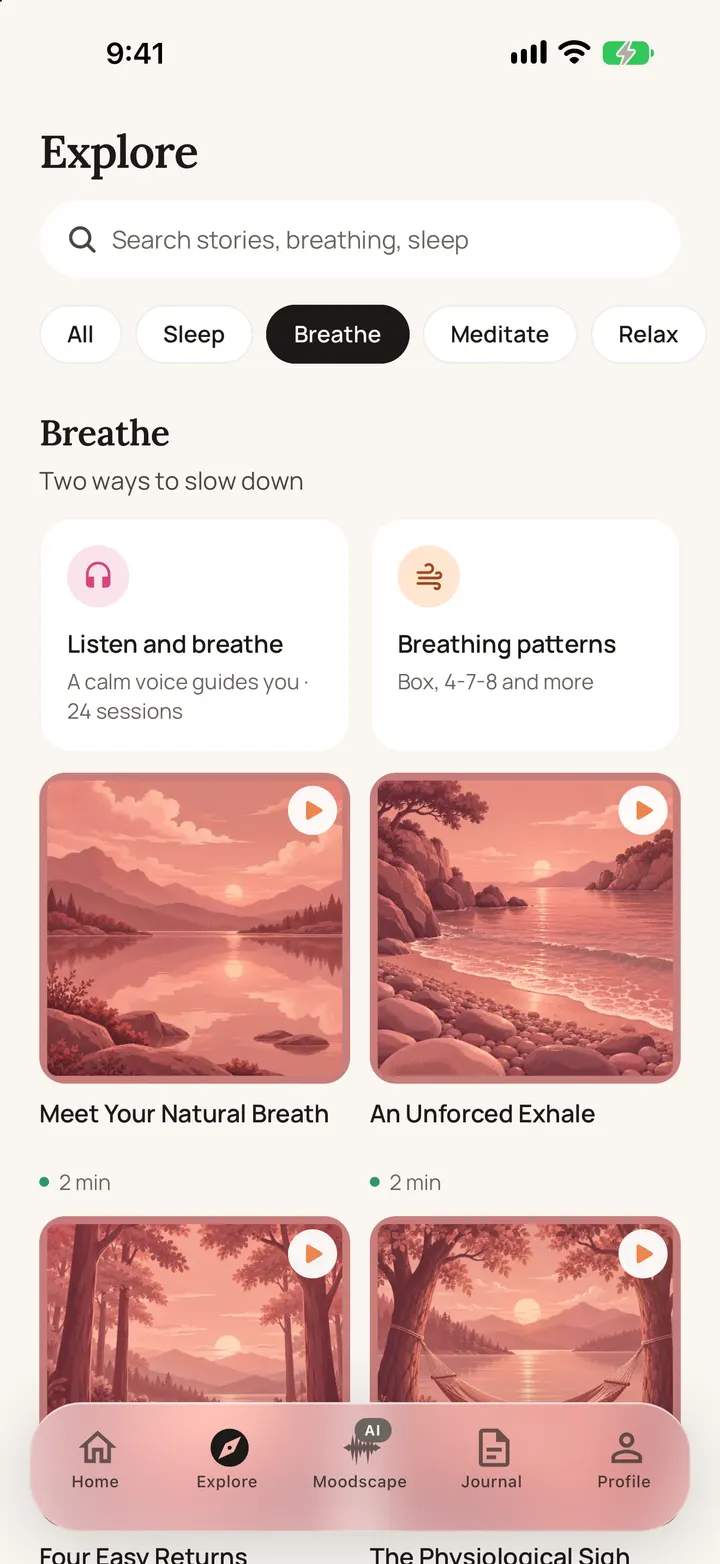
In Moodscape, Midday on Home is a short breath, a sigh or box breathing, then one short guided session that plays once. The breathing tool has no Premium gate and includes Box Breathing among its patterns. Explore guided meditations on the web or get Moodscape for iPhone. Free users get the free sessions, and subscribers rotate through every session tagged for the moment.