
The physiological sigh is a breath with two inhales and one long exhale: breathe in through your nose, take a second short sip of air on top, then let it all out slowly through your mouth. A version of it, called cyclic sighing, was tested in a Stanford-led study of five-minute daily practice. It takes a few seconds per breath and works sitting at a desk, standing in a corridor or lying down.
How to do one
- Sit or stand with your shoulders loose. Rest your hands wherever they land.
- Breathe in through your nose until your lungs feel comfortably full.
- Without breathing out, take a second, shorter inhale through your nose to fill them a little more. The study's instructions note that the second inhale is normally briefer than the first.
- Breathe out slowly through your mouth until the air is gone.
- Let the next breath come on its own, then repeat from step 2.
Keep every breath soft. Forcing the air in or pushing the exhale out defeats the point. If you feel lightheaded, stop and breathe normally.
How long to keep going
The researchers asked people to repeat the pattern for five minutes a day. The NHS breathing exercises for stress also suggest practising for at least five minutes, and say you can do it standing, sitting in a chair that supports your back, or lying down.
Five minutes suits a planned break. Fewer sighs at a desk between tasks is a shorter version that the study did not measure.
What the research says
The main evidence is a Stanford-led randomized trial in Cell Reports Medicine. It compared three daily five-minute breathing exercises with mindfulness meditation over a month. The exhale-focused cyclic sighing group improved mood more than the meditation group, and breathing rate dropped more as well.
The paper is also clear about its limits. It began as an exploratory study ahead of a larger trial, it was run remotely so the team could not watch how closely people followed the instructions, groups were small, and it lasted four weeks with no follow-up. Stanford Medicine's summary adds that people with moderate to severe psychiatric conditions were not part of it. Take the sigh as a simple breathing pattern to try, not as a fix for anything.
A sigh in the middle of the day
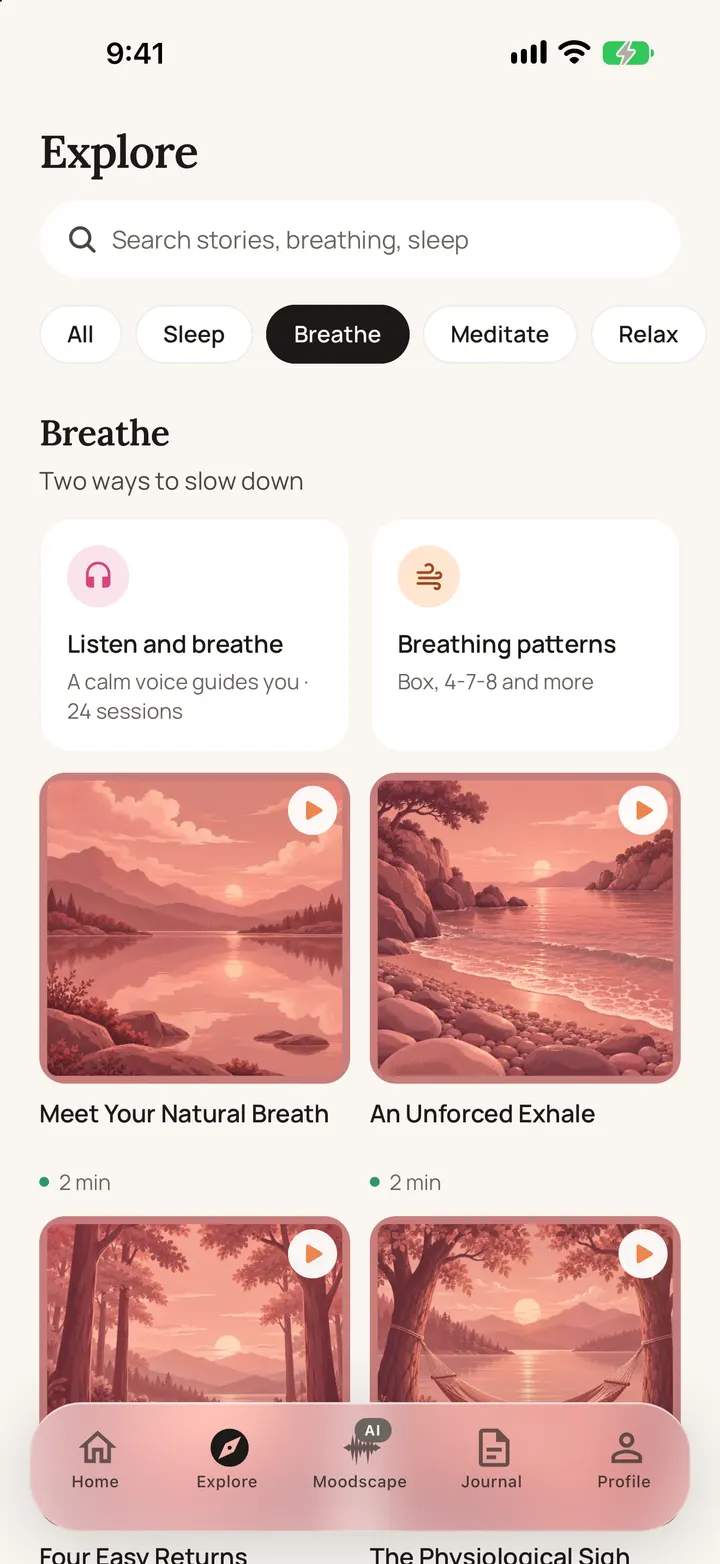
Moodscape's Midday moment starts with a short breath, a sigh or box breathing, followed by one short guided session. Midday runs from 11:00 to 19:00 local time on Home. The Breathe section of the app, under Explore, has guided breathing patterns with an animated breathing circle and voice cues, including one called Calming Sigh.
Next step
For another pattern, try box breathing on the web, or get Moodscape for iPhone. The breathing tool has no Premium gate.