
To do 4-7-8 breathing, breathe in through your nose for a count of four, hold for seven, and breathe out through your mouth for eight. The out-breath lasts twice as long as the in-breath. Here are the steps in order, how fast to count, and what to change if the hold feels too long.
The steps
These follow the Cleveland Clinic guide to 4-7-8 breathing. Sit with your back straight, or lie down if you are in bed.
- Rest the tip of your tongue behind your upper front teeth and leave it there.
- Breathe out fully through your mouth, with a soft whooshing sound. The count starts after this breath.
- Breathe in through your nose for a count of four.
- Hold your breath for a count of seven, without straining.
- Breathe out through your mouth for a count of eight, lips slightly pursed, with the same whoosh.
That is one round. Repeat steps three to five three more times, four rounds in all, then let your breathing go back to normal.
Try 4-7-8 breathing
Breathe out fully through your mouth first. Then follow four rounds: in through your nose for four counts, hold for seven, and out through your mouth for eight.
Ready when you are.
Stay seated or lying down. If the hold feels too long or you feel lightheaded, stop and return to your usual breathing.
How fast to count
The numbers are counts, not seconds. The same guide says to pick a pace that suits you and to keep the ratio the same when you change it. A quick count is fine at first: four, seven and eight at a brisk pace still make the out-breath twice as long as the in-breath.
If seven feels like a long time to hold, count faster. Do not shorten the hold on its own, because that changes the pattern. With practice the counts can slow down.
If you feel lightheaded
The Cleveland Clinic notes that people new to the exercise may feel a little lightheaded or short of breath while they get used to breathing more slowly. The guide stops at four rounds. If the feeling comes on, stop and return to your usual breathing.
Keep the breath comfortable. The NHS guide to breathing exercises for stress says to let the breath flow as deep as is comfortable, without forcing it, and that applies to the in-breath here too.
The National Center for Complementary and Integrative Health says relaxation techniques are generally considered safe for healthy people, though some people occasionally report increased anxiety or intrusive thoughts. It advises seeing a health care provider about severe or long-lasting symptoms. 4-7-8 breathing is a relaxation exercise for general use, and you should stay seated or lying down and never practice while driving.
When to practice
The Cleveland Clinic article quotes one of its doctors suggesting three rounds twice a day, at two set moments such as after waking and before bed. A regular time matters more than which time you choose.
In bed, the counting gives your attention one small job, which the same article describes as a way to focus on something other than your worries. Keep expectations modest about sleep itself: the NCCIH says relaxation techniques on their own do not seem especially promising for sleep. For a bedtime pattern with no breath holds, try the breathing exercise to fall asleep.
4-7-8 or box breathing
Both are counted patterns. Box breathing uses four equal counts and holds twice, once with full lungs and once with empty lungs. 4-7-8 has one hold and a long out-breath. If the seven-count hold is uncomfortable, box breathing keeps every hold to four counts or fewer.
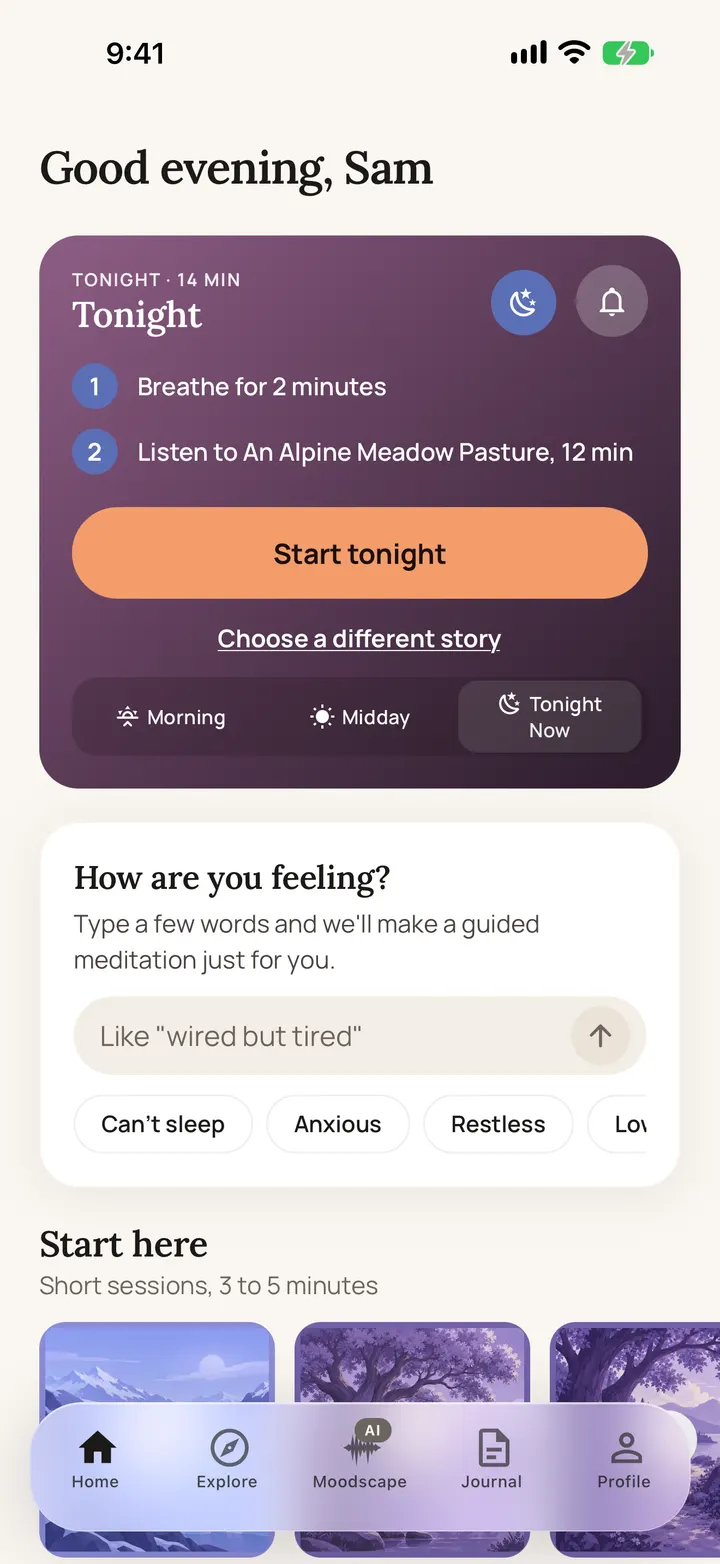
4-7-8 Breath in the app
In the Moodscape app, the breathing tool has no Premium gate and includes 4-7-8 Breath among its patterns, with an animated breathing circle and voice cues. Get Moodscape for iPhone or try the free 4-7-8 timer on the web.