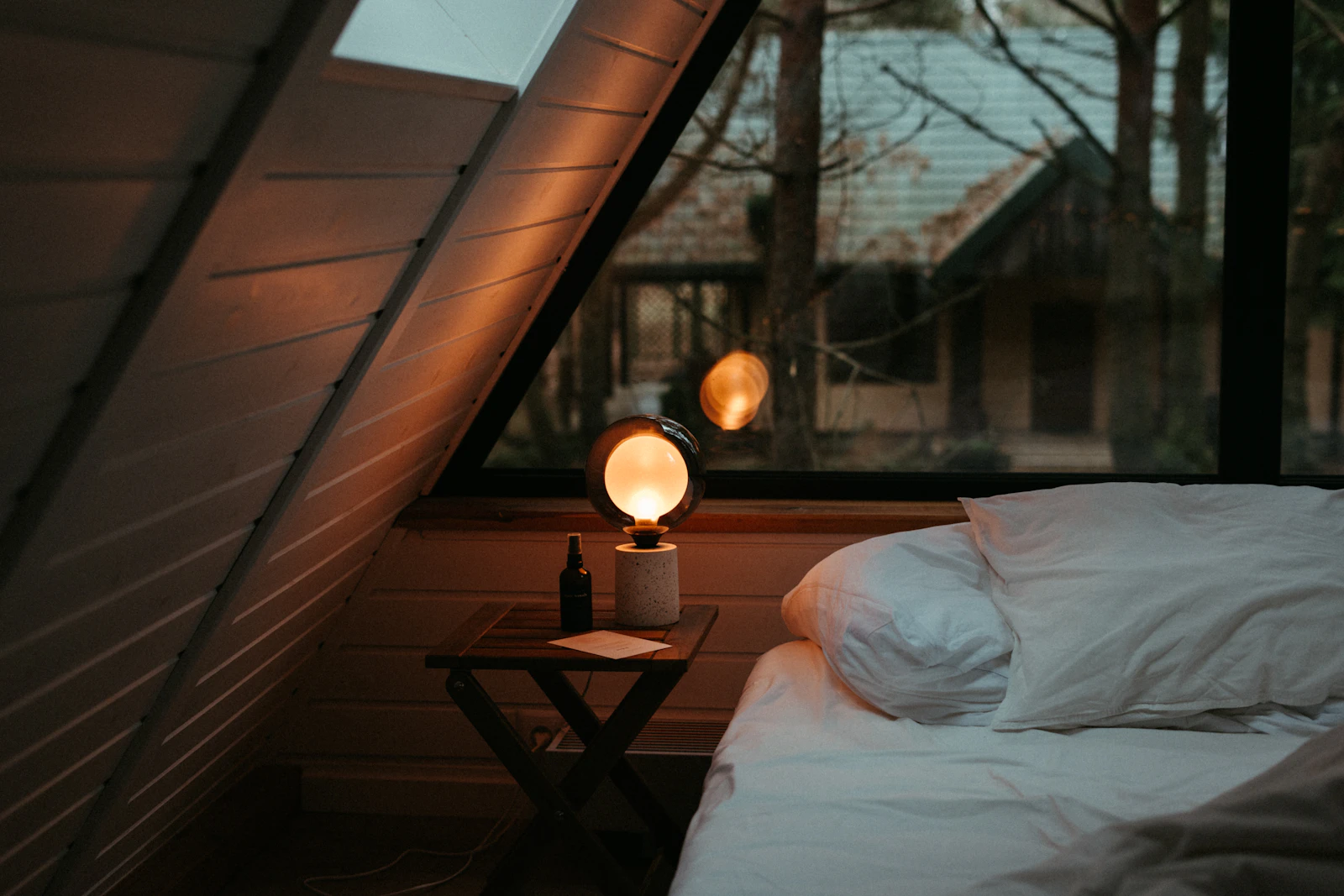
A slow, counted belly breath is a simple breathing exercise to fall asleep with, and you can do it lying down in the dark. Breathe in through the nose, let the out-breath run longer, and count. It will not switch sleep on, but it gives a busy mind one small job.
The routine
The steps follow the NHS breathing exercise for stress, adapted for bed.
- Lie on your back with your arms resting a little away from your sides, palms up. Loosen anything tight around your waist or chest.
- Rest one hand on your belly. Let a breath travel down toward it, as deep as feels comfortable and without forcing it.
- Breathe in slowly and steadily through your nose while counting 1 to 5. At first you may not reach 5, and that is fine.
- Breathe out through your mouth, counting 1 to 5 again if counting helps.
- Repeat for at least five minutes.
Your hand should rise as you breathe in and fall as you breathe out, a check described by Oxford Health NHS Foundation Trust. That page also suggests making sure you have a long out-breath. If your in-breath runs to three counts, try letting the out-breath run to four or five.
When your mind drifts off the count
It will. Lose the count and start again at 1. The same Oxford Health script advises bringing the mind back to the breath when it wanders to other things, so there is nothing to fix, only a return to make.
Keep the room quiet first
Breathing exercises sit on the NHS list of ways to relax in the evening, next to reading, meditation and calming music. The same page advises keeping phones, tablets and computers away for an hour before bed, so start the routine with the screen already set down. See the NHS guide to falling asleep faster.
How much to expect
The research is modest. The National Center for Complementary and Integrative Health describes reviews of slow breathing that found a modest reduction in blood pressure and preliminary evidence that diaphragmatic breathing may help reduce stress. It also says relaxation techniques on their own do not seem especially promising for sleep. Use a breathing exercise to wind down, and judge it by how the next ten minutes feel.
If you are still awake
The NHS says not to force sleep. If you are still awake after around 20 minutes, get up, sit somewhere comfortable, do something calm, and go back to bed when you feel sleepy.
When to stop
Relaxation techniques are generally considered safe for healthy people, but NCCIH notes that some people report increased anxiety, intrusive thoughts or fear of losing control. If breathing practice makes you feel worse, stop and choose something else, such as quiet music or a narrated story. Speak with a doctor or pharmacist if you have a health condition that affects your breathing, or if poor sleep continues. This guide is general information, not individual advice.
More ways to wind down
Our meditation before bed routine adds a body scan after the breathing, and the sleep stories guide covers narrated bedtime stories. For a pattern better suited to daytime stress, see box breathing.
Try it with Moodscape
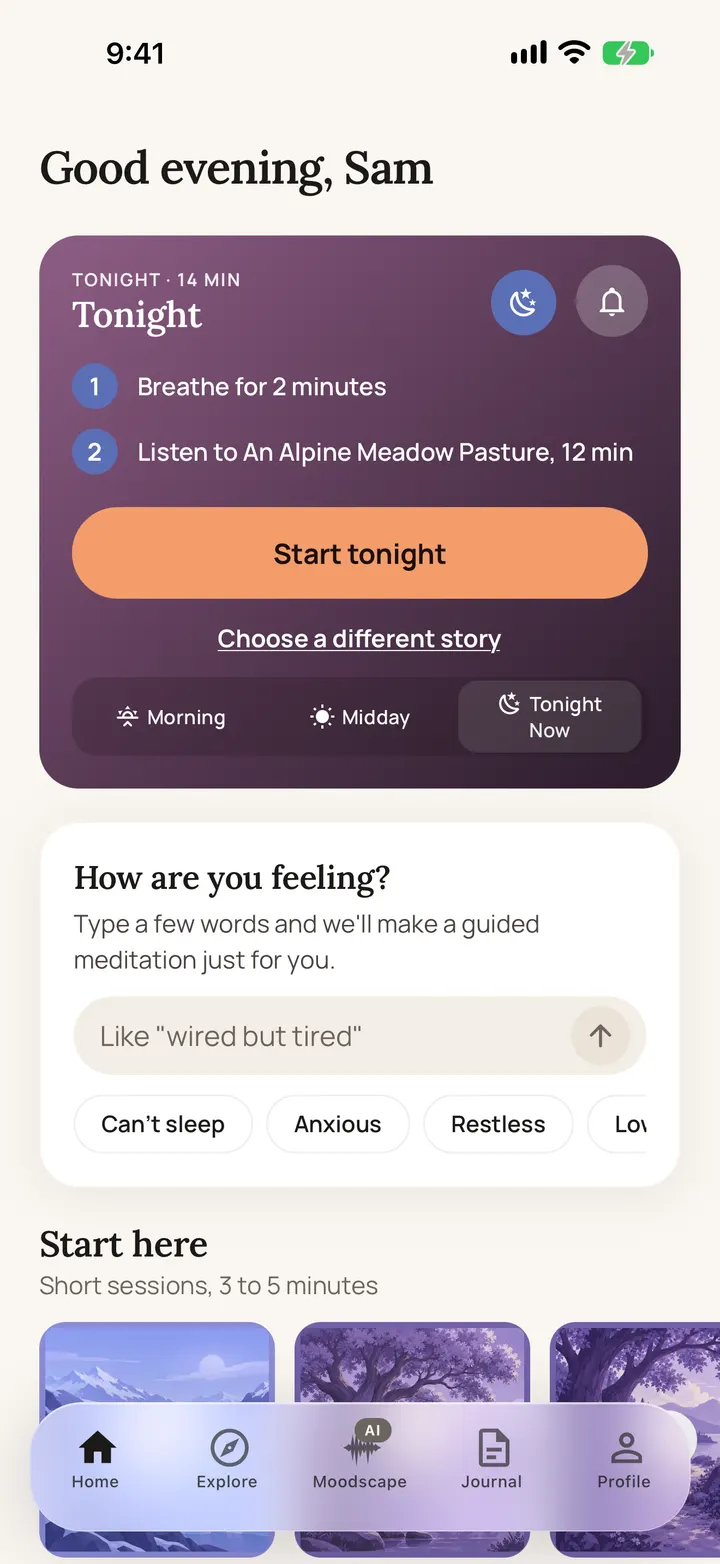
The Breathe section of the Moodscape app has guided breathing with a visual breathing circle, and its patterns include 4-7-8 Breath and Calming Sigh. Explore sleep stories on the web or get Moodscape for iPhone.