For a gratitude meditation, sit comfortably, settle your breathing for a minute, then bring to mind three specific good things from the last day and spend about a minute on each. Five minutes is enough, and the practice needs no cushion, app or special words.
Why specific beats general
"Grateful for family" is easy to say and easy to skip past. Greater Good in Action, a program of the University of California, Berkeley, advises being specific: describe exactly what happened and when, and go deep on one thing rather than writing a long, shallow list. It also says that focusing on people has more impact than focusing on things.
The same page describes the research behind gratitude practice. In a 2003 study by Emmons and McCullough, participants who wrote about gratitude weekly for 10 weeks, or daily for two weeks, reported more gratitude, more positive mood, more optimism about the future and better sleep than those who wrote about hassles or daily life. That was a writing task, so it does not test the meditation below. The page notes that more research is needed on how well it works across other groups and cultures.
A five-minute gratitude meditation
- Sit in a chair or on the edge of the bed with your feet on the floor and your hands resting on your lap. Close your eyes or look softly at the floor.
- Spend the first minute on the breath. Breathe in through the nose and out slowly, and notice where you feel the air most, at the nostrils or the belly.
- Bring to mind one good thing from yesterday. Pick something small and exact, such as the first sip of tea or a neighbour holding the door. Replay it in detail: where you were, what you saw, what was said.
- Stay with it for a minute. Notice what the memory feels like in your body, and let it be as warm or as ordinary as it is.
- Repeat with a second good thing, then a third. For one of them, choose a person and name what they did.
- Finish with one slow breath. Open your eyes and note one thing you are looking forward to today.
If the memory of a good thing brings up something sad, return to the breath. Nobody needs to feel a particular way for the practice to count.
Ways to vary it
The Greater Good page lists a few other prompts. Think about what life would be like without a person or thing you value. Look for a surprise, since surprises tend to produce stronger gratitude. See a good thing as a gift rather than something owed. Using a different detail each morning keeps the practice from going stale.
When the mind wanders
It will, usually towards today's to-do list. The NHS guide to mindfulness describes meditation as bringing your attention back whenever the mind starts to wander. Come back to the memory or the breath, and each return counts as practice. The guide to a wandering mind has more on this.
When to skip it
The NHS says mindfulness is not right for everyone and that some people find it can make them feel worse. If a gratitude exercise leaves you more unsettled, stop and do something active instead.
Where it fits
A morning sitting works well before the phone comes out; the morning meditation routine guide covers building one. To direct warmth to people rather than events, try loving-kindness meditation. A chair works fine, and the guide to meditating in a chair covers posture.
Next step
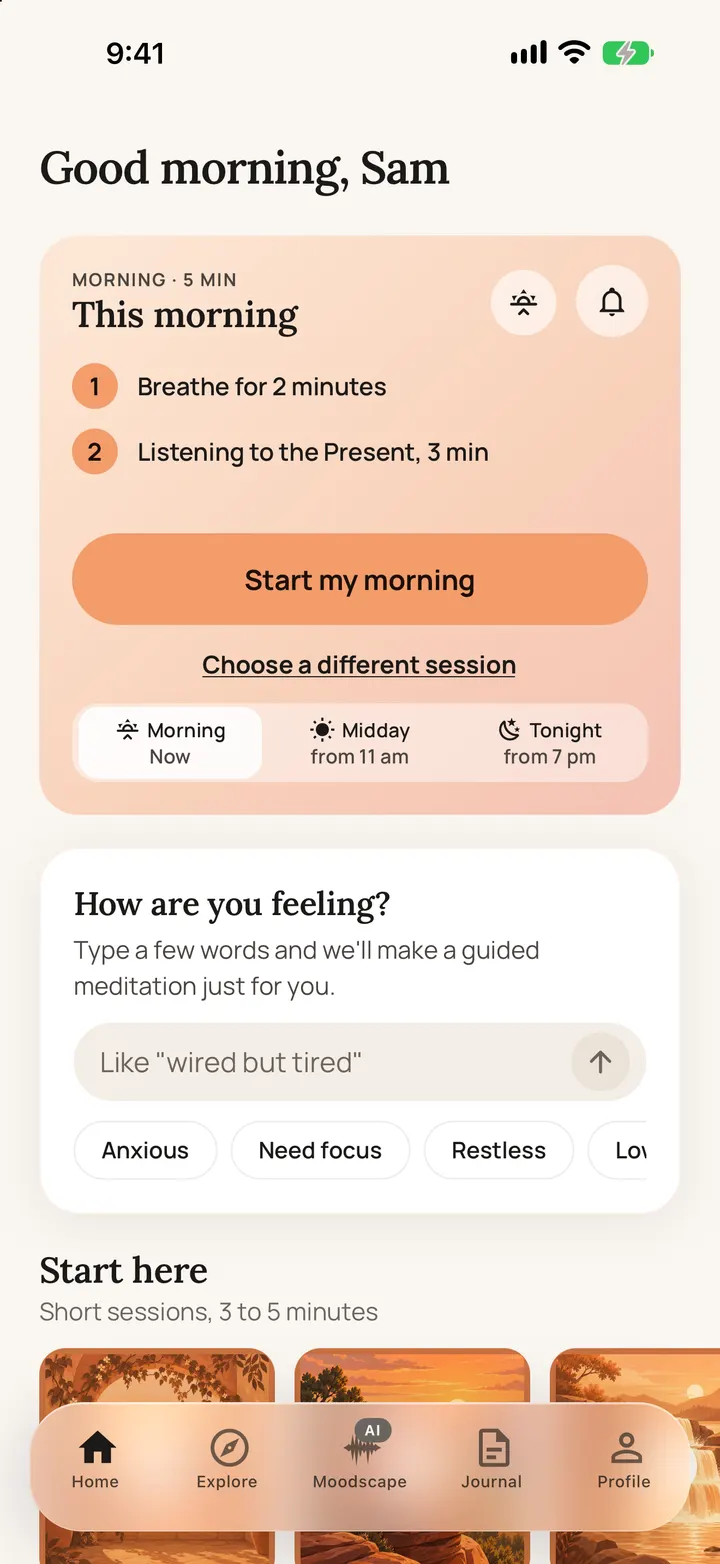
In Moodscape, Morning on Home runs from 04:00 to 11:00 local time: a short breath, then one short guided session that plays once. Try a guided meditation on the web or get Moodscape for iPhone.